Project Overview
Following successful projects in Katwijk and Portugal, MH Poly Consultants & Engineers was once again involved in a project for The Great Bubble Barrier®. This time, the assignment focused on the realization of a bubble barrier in the Van Harinx Canal in Harlingen.
The bubble barrier uses an innovative technique in which a continuous stream of air bubbles guides floating plastic waste to the water surface and towards a collection system. This effectively captures plastic while allowing fish and vessels to pass freely.
For this project, the Environment & Spatial Planning and Hydraulic Engineering & Infrastructure teams worked closely together. MH Poly carried out the environmental sediment investigation, determined the required anchoring system for the bubble barrier, and designed the supporting structure for the plastic collection system.
Engineering and Technical Design
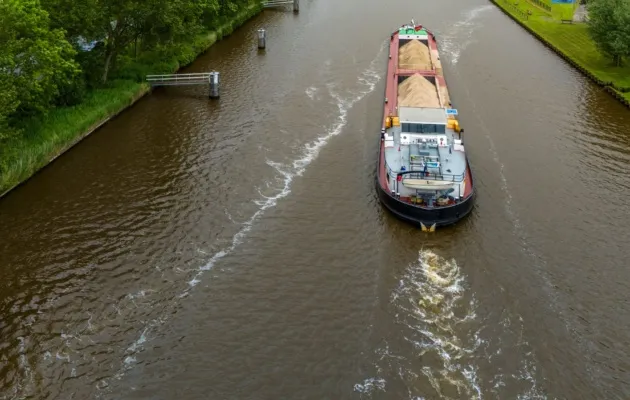
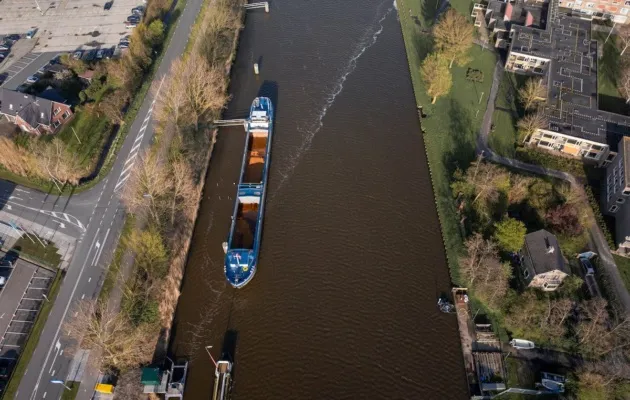
The bubble barrier consists of six sections and an additional starter section. These are secured to ballast blocks on the canal bed using clamping strips. The anchoring system was designed to withstand intensive inland shipping traffic (CEMT Class V) as well as the flow conditions generated during discharge operations at the Tsjerk Hiddes Locks.
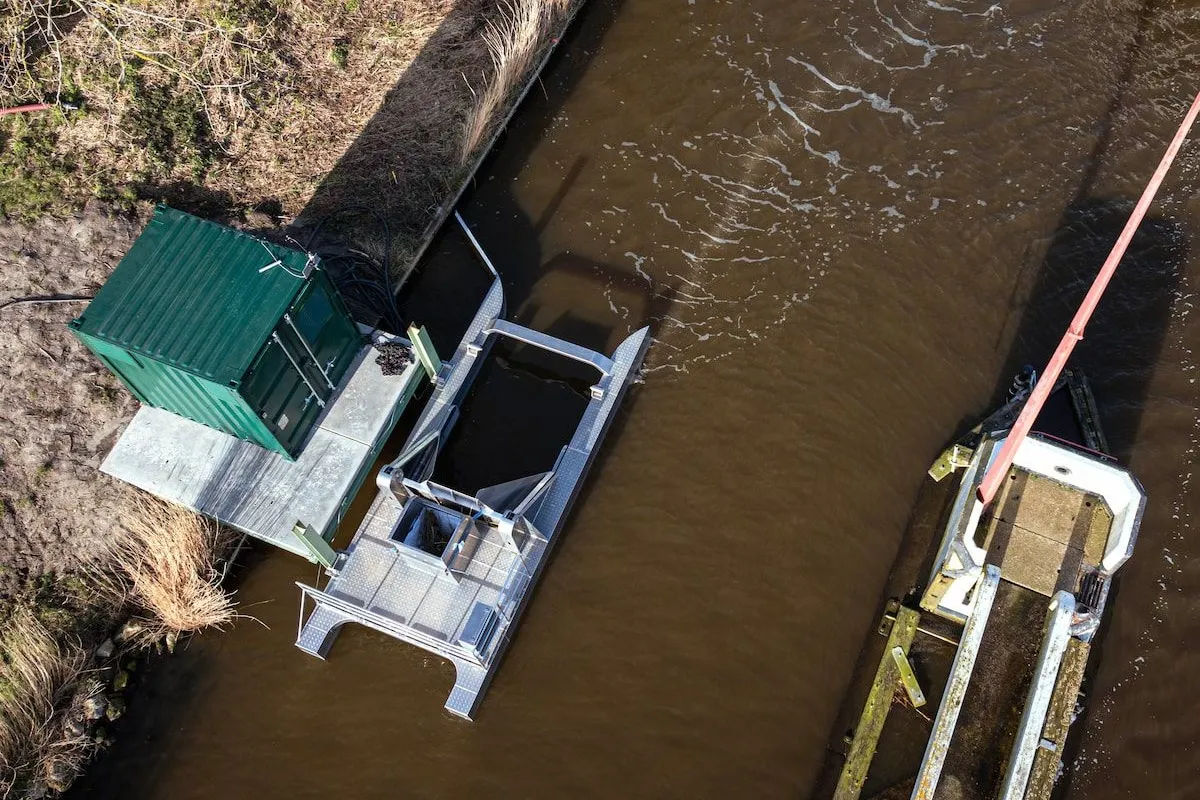
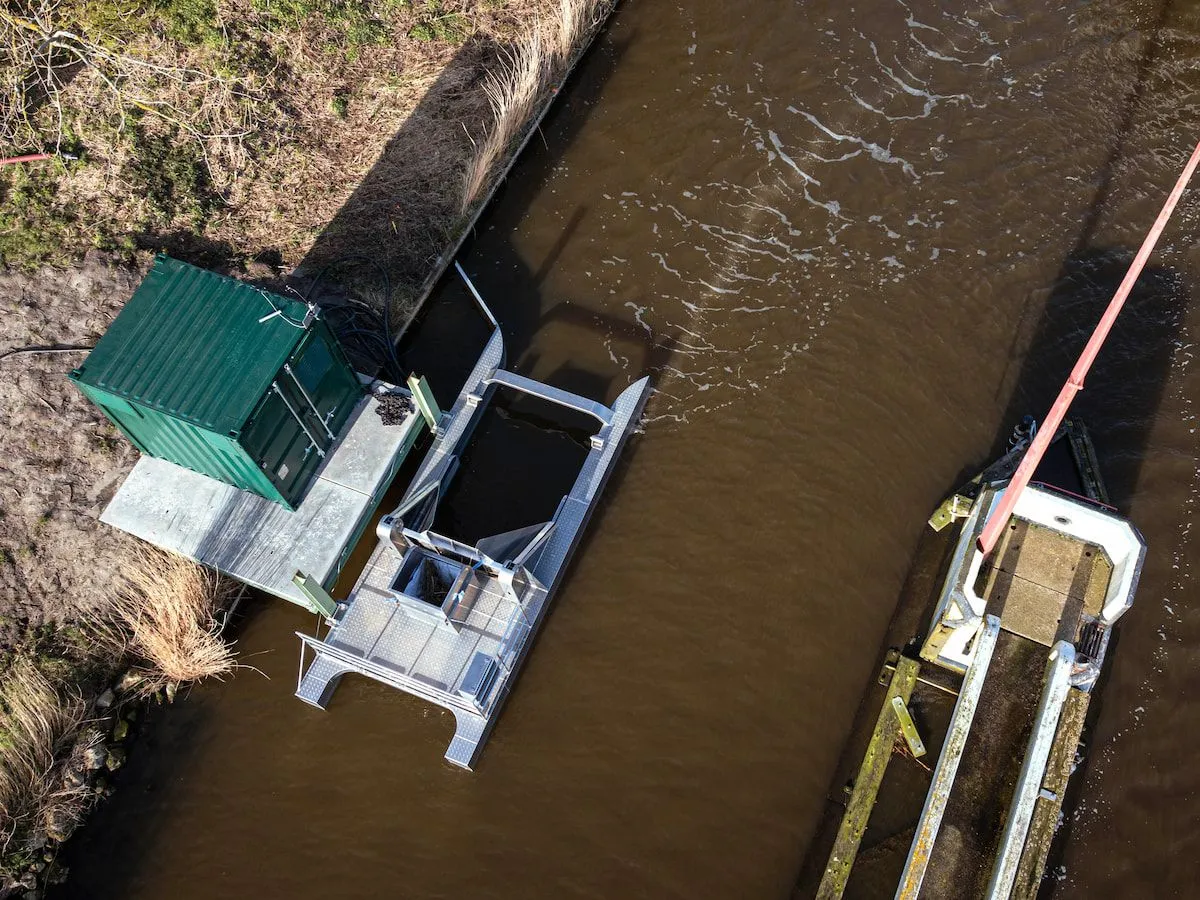
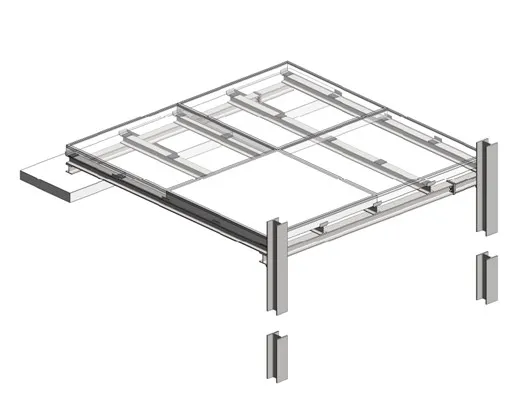
The collection system is located along the north-western quay, downstream of the bubble barrier. Because the existing timber wale did not provide sufficient load-bearing capacity, MH Poly designed an innovative support platform.
The 4 × 4 metre platform is partly supported by concrete slabs and partly by structural profiles installed in the canal. These profiles not only provide structural support but also act as guides, allowing the collection system to move freely with changing water levels. This results in a robust, durable solution without placing additional loads on the existing quay structure.
Results and Impact
The Great Bubble Barrier in Harlingen is now fully operational and actively contributes to reducing plastic pollution in open water. The project demonstrates how innovative technology and smart engineering can be combined to deliver a sustainable solution with minimal environmental impact.
For MH Poly, this project is an excellent example of how engineering expertise can contribute to cleaner waterways and future-proof water infrastructure.
Project Activities
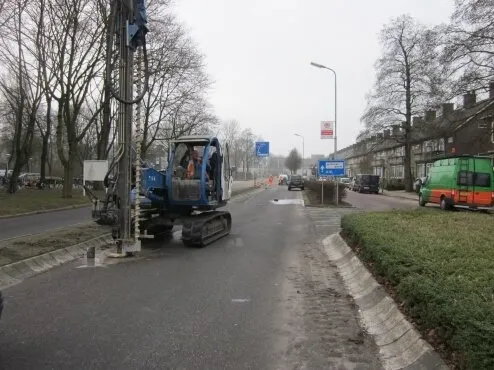
- Conducting an environmental sediment investigation
- Determining the required anchoring system for the bubble barrier
- Developing design alternatives for the support platform and collection system
- Preparing the detailed design (Detailed Engineering)
- Producing technical drawings
- Actively contributing to design reviews and brainstorming sessions with the client