Preliminary Sediment Investigation for Future Channel Deepening
The objective of the investigation was to determine whether the dredged material could be safely relocated in saline surface waters and to provide the legally required environmental declaration to support the planned dredging works.
Thorough Preparation and Efficient Offshore Execution
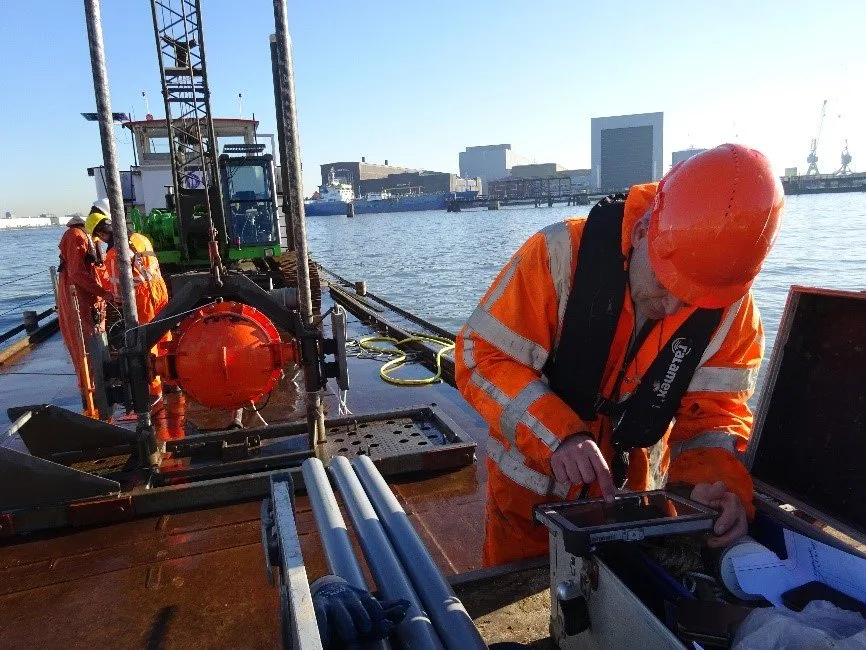
As all sampling activities were carried out offshore, detailed preparation was essential. Together with Rijkswaterstaat (the Dutch Directorate-General for Public Works and Water Management), we first developed a comprehensive sampling strategy. This strategy was subsequently coordinated with the Human Environment and Transport Inspectorate (ILT), ensuring that both the methodology and execution plan were agreed upon before fieldwork commenced.
Following approval, offshore sampling was carried out from the government survey vessel Zirfaea. Using both a Vibrocorer and a Box Corer, the navigation channel was systematically investigated. In total, 238 sediment cores and samples were collected across the entire project area.
From these samples, 25 composite samples were prepared for laboratory analysis to determine the chemical quality of the sediments. In addition, the sand content of the dredged material was analysed to establish its physical characteristics.
Result: Clean Sandy Marine Sediment System
Thanks to a well-defined investigation strategy, close coordination with the relevant authorities, and efficient offshore execution, the project was completed smoothly and with minimal risk.
The preliminary sediment investigation demonstrated that the area consists of a clean sandy marine sediment system. The results confirmed that the dredged sediments are suitable for relocation in saline surface waters. The findings were submitted to the ILT and provide the legally required environmental basis for the planned dredging operations.