
Algera Lock: Dredging silt from concrete slabs and underwater pavements
The Algera Lock, part of the Hollandsche IJssel Storm Surge Barrier, plays a vital role in maintaining the region’s flood protection and navigability. To keep the lock fully operational, accumulated silt must be dredged periodically, particularly when the lock gates are closed. Before these dredging activities can commence, the environmental quality of the dredged material must be accurately determined.
A specific challenge: silt on a concrete slab
Unlike conventional waterways with natural sediments, the bed of the Algera Lock consists of a concrete slab and underwater pavement. As a result, the investigation does not fall under the standard Dutch water sediment investigation guideline (BRL SIKB 2003). Instead, it requires an in-situ batch inspection in accordance with BRL SIKB 1001.
This approach is necessary to determine whether the dredged material can be beneficially reused under the Dutch Soil Quality Decree (Besluit bodemkwaliteit – Bbk) or whether it must be transported to a licensed disposal facility.
This situation is not unique to the Algera Lock. The same methodology applies to locks, sluices and hydraulic engineering structures with hardened underwater surfaces throughout the Netherlands.
Updated regulations: NEN 5720 and Protocol 2003
Since October 2023, Dutch legislation has been revised through the updated NEN 5720 standard. As a result, a batch inspection is no longer mandatory for every lock chamber. Instead, MH Poly now generally recommends conducting a water sediment investigation in accordance with Protocol 2003, where applicable.
Every project is assessed individually and carried out in compliance with the latest legislation and guidelines, ensuring clients receive a fully compliant and future-proof solution.
Execution of the investigation
The investigation was carefully prepared and executed. Prior to fieldwork, existing site information was verified against the sampling plan, and historical exploratory investigations were reviewed. Where necessary, the field methodology was adapted to suit the actual site conditions.
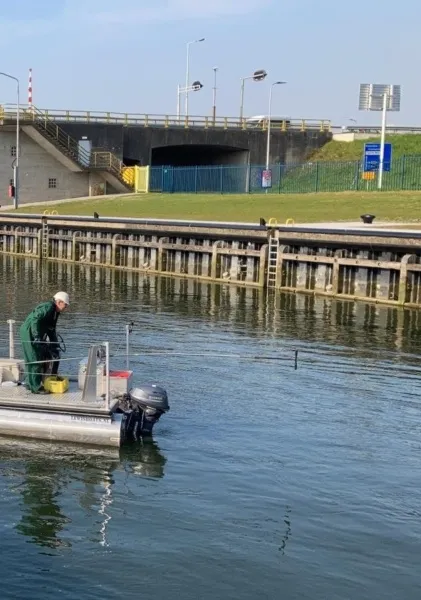
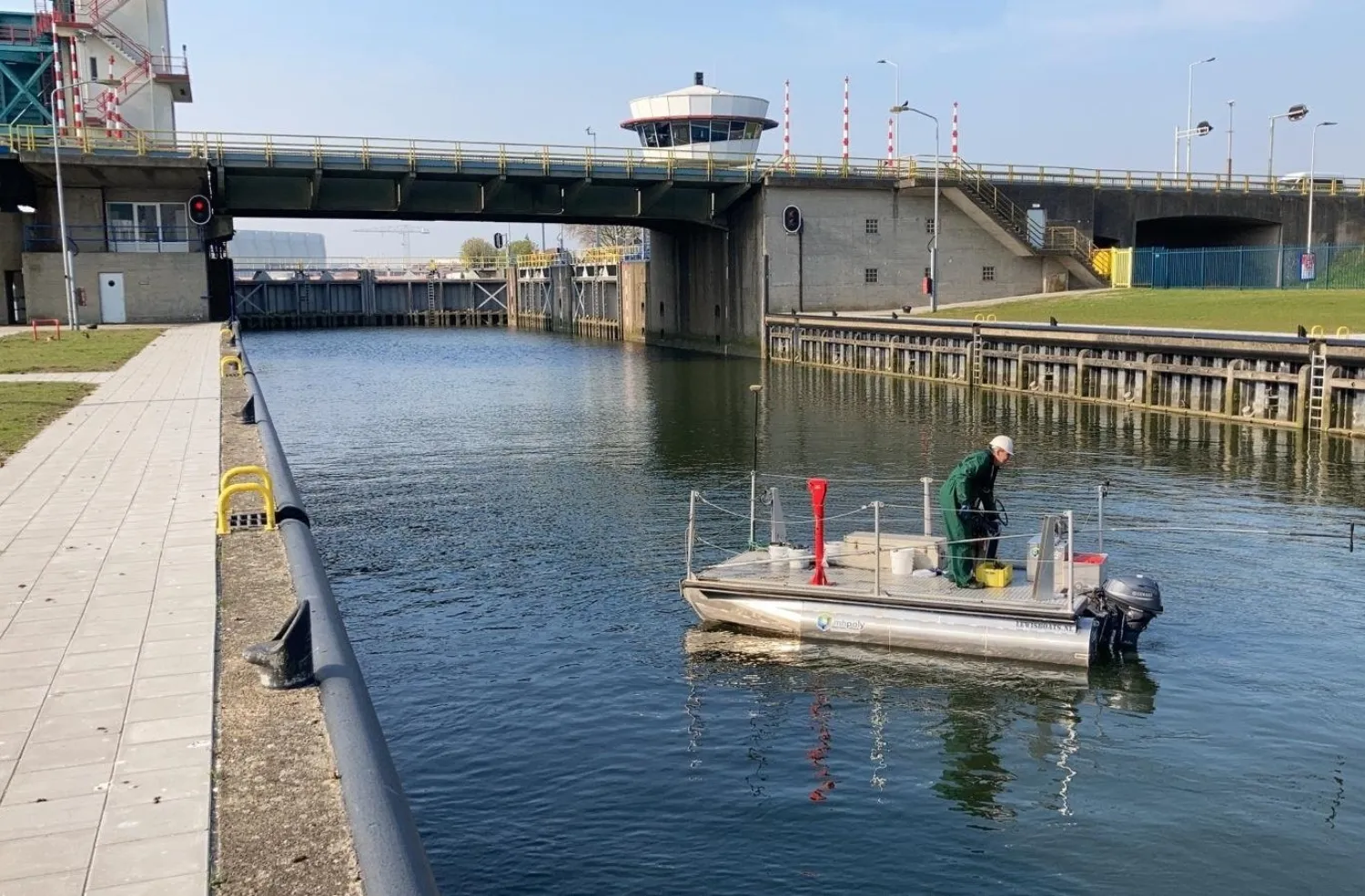
Silt samples were collected using a suction dredging vessel, operating from an MH Poly pontoon, by a certified field investigation team. Throughout the fieldwork, close coordination was maintained with both the lock operator and the environmental manager to ensure safe and efficient execution.
MH Poly's Scope of Work
MH Poly Consultants & Engineers B.V. managed the entire project, from proposal to final reporting. Our services included:
- Project preparation and fieldwork planning
- Coordination with stakeholders and site access arrangements
- Preliminary investigation in accordance with NEN 5717
- Sediment sampling and accredited laboratory analysis
- Interpretation of analytical results and preparation of the final report
Thanks to this structured and expert approach, the environmental quality of the dredged material was successfully established, allowing the accumulated silt to be safely removed and transported to a licensed processing and disposal facility.