
Project Overview
Significant contamination has been identified in both the soil and groundwater at the industrial site in Dordrecht. The primary contaminants are creosote—a tar-based substance originating from treated railway sleepers—and heavy metals associated with historic land raising using pyrite cinders.
Although the contaminated layers are sealed beneath asphalt and paving, excavation is not a feasible remediation option because the site remains fully operational. A containment-based remediation strategy was therefore adopted.
Approach: Groundwater Treatment and Monitoring
The remediation strategy consists of three integrated components:
- Drainage system: extracts contaminated groundwater
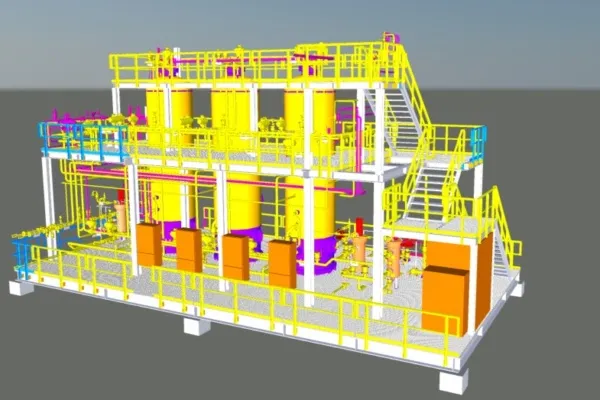
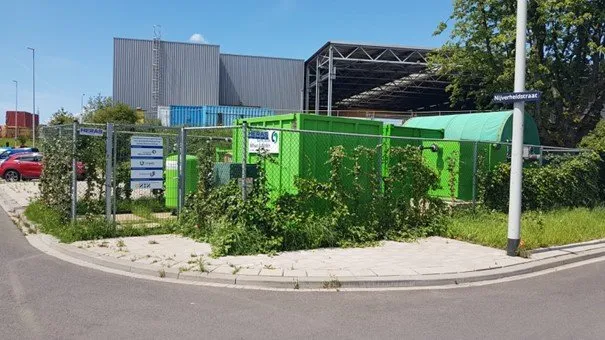
- Groundwater treatment plant: removes heavy metals from the extracted groundwater
- Long-term monitoring programme: monitors groundwater quality and tracks the spread of contamination
This integrated approach ensures that the contamination remains under control and poses no unacceptable risk to the surrounding environment.
Innovation: Biological Remediation Pilot
Since 2019, MH Poly has been working with Deltares to investigate whether the contamination can be reduced through natural biological degradation.
During this pilot study, the groundwater treatment system was temporarily shut down to assess:
- Whether the contamination remains stable without active treatment
- Whether natural biodegradation processes occur
The findings of this pilot project provide valuable input for future remediation strategies and the further optimisation of site management.
MH Poly's Role
MH Poly is responsible for the complete environmental management programme, including:
- Historical site investigation
- Groundwater flow analysis
- Preparation of geological cross-sections and contamination contour maps
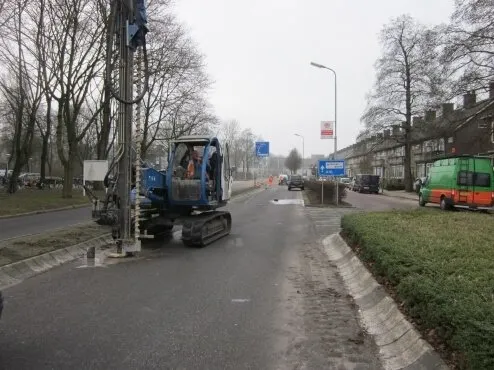
- Soil and groundwater sampling and laboratory analysis
- Monitoring and reporting to the client
- Advice on groundwater treatment technologies and biological remediation
Results and Future Outlook
The contamination is being monitored over a 30-year period in accordance with the approved remediation plan through 2038. This long-term approach ensures that:
- The contamination remains under control
- Any migration of contaminants can be detected and addressed promptly
- The groundwater treatment system continues to be optimised where possible
This carefully managed long-term strategy provides a safe, sustainable, and effective solution for managing complex soil and groundwater contamination.
Project Activities
- Historical site investigation
- Groundwater flow analysis
- Preparation of geological cross-sections
- Delineation of contamination contours
- Soil and groundwater sampling
- Laboratory analyses
- Monitoring and reporting
- Advice on groundwater treatment systems
- Biological remediation research
Client: Municipality of Dordrecht
In collaboration with: Verhoeve Milieu & Water, Deltares, Environmental Service Zuid-Holland Zuid (Omgevingsdienst Zuid-Holland Zuid), and Hollandse Delta Water Authority